Authentication & Provenance
How to Authenticate an Omega Speedmaster Moonwatch: Caseback, Caliber and Dial
Caseback engraving, Cal. 1861 vs 3861, dial fonts, sub-dial alignment and papers.
Professional techniques to authenticate an Omega Speedmaster
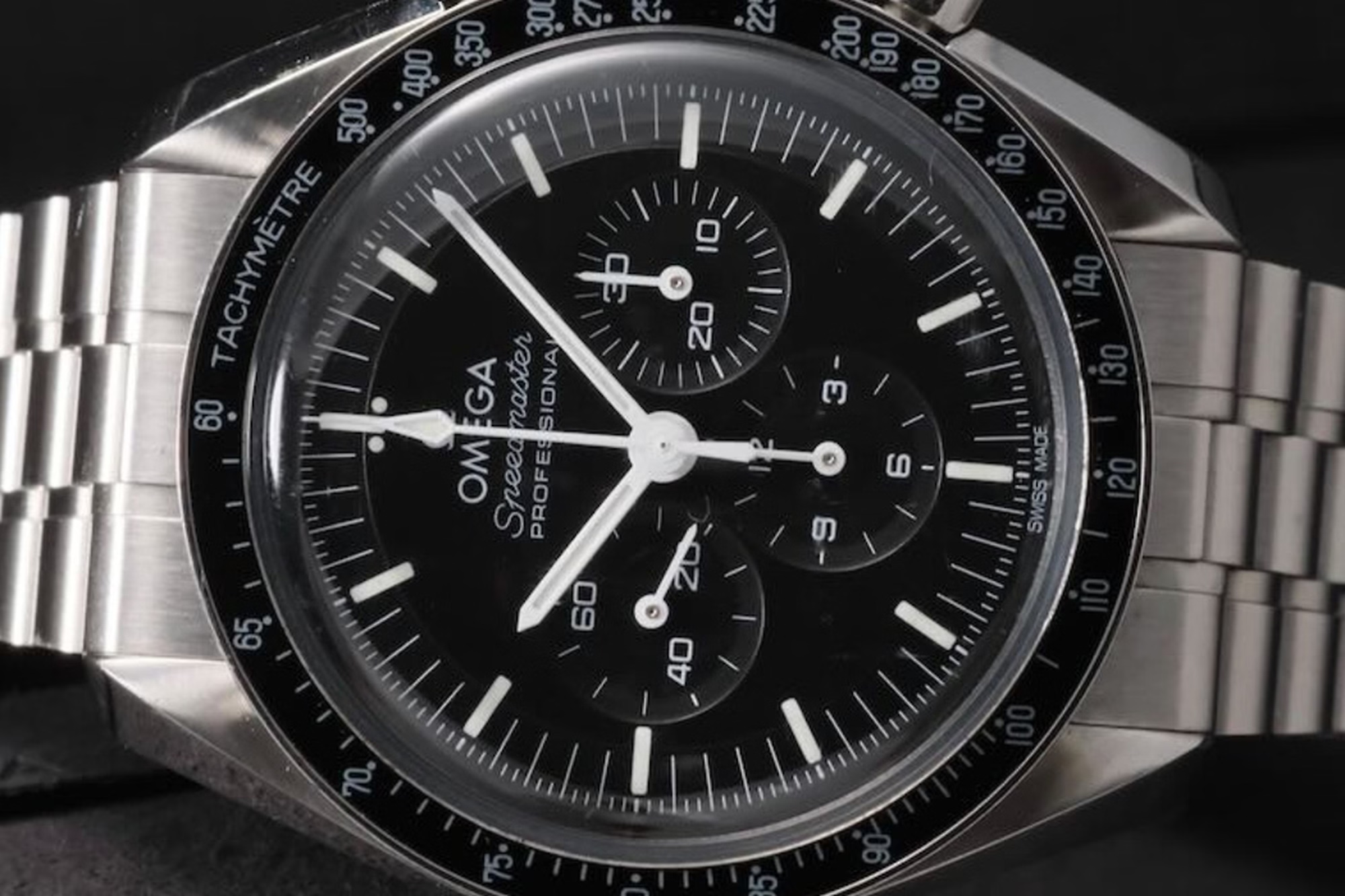
Authenticate a Speedmaster Moonwatch by checking the caseback (Seahorse/hippocampus engraving on solid-back models, crisp depth and text), the movement (hand-wound Cal. 1861 or Co-Axial Master Chronometer Cal. 3861), the dial fonts and sub-dial alignment (even spacing, sharp printing, "step" dial on current models), and the papers/serial. Movement and dial precision are the decisive checks.
Authentication checklist
- Caseback: Correct hippocampus medallion (solid back) or sapphire view of Cal. 3861; crisp engraving
- Movement: Hand-wound Cal. 1861 or Co-Axial Cal. 3861; clean finishing; correct architecture
- Dial: Sharp printing, evenly spaced sub-dials, correct "step" dial profile on current refs
- Hands: Correct length/shape; lume matches dial plots
- Crystal: Hesalite (with tiny Omega logo at center) or sapphire per reference
- Papers: Matching serial, warranty card, pictogram booklet
Caseback and movement
Solid-caseback Moonwatches carry the hippocampus (Seahorse) medallion with crisp detailing. Current sapphire-back models reveal the Caliber 3861; older ones house the Caliber 1861.
The movement should match the reference and era, a sapphire caseback over a 1861, or the wrong caliber architecture, is an immediate red flag. The engraving should be deep and the lines of the icon must be precise, and any sign of a laser etched or shallow logo is an immediate indication of a counterfeit component.
Dial fonts and the Hesalite tell
Genuine dials have razor-sharp printing, perfectly even sub-dial spacing, and (on current references) the subtly "stepped" dial profile. A genuine Hesalite crystal has a tiny Omega logo laser-etched at its center, a quick, helpful authentication point that fakes often miss or render crudely.
Papers and provenance
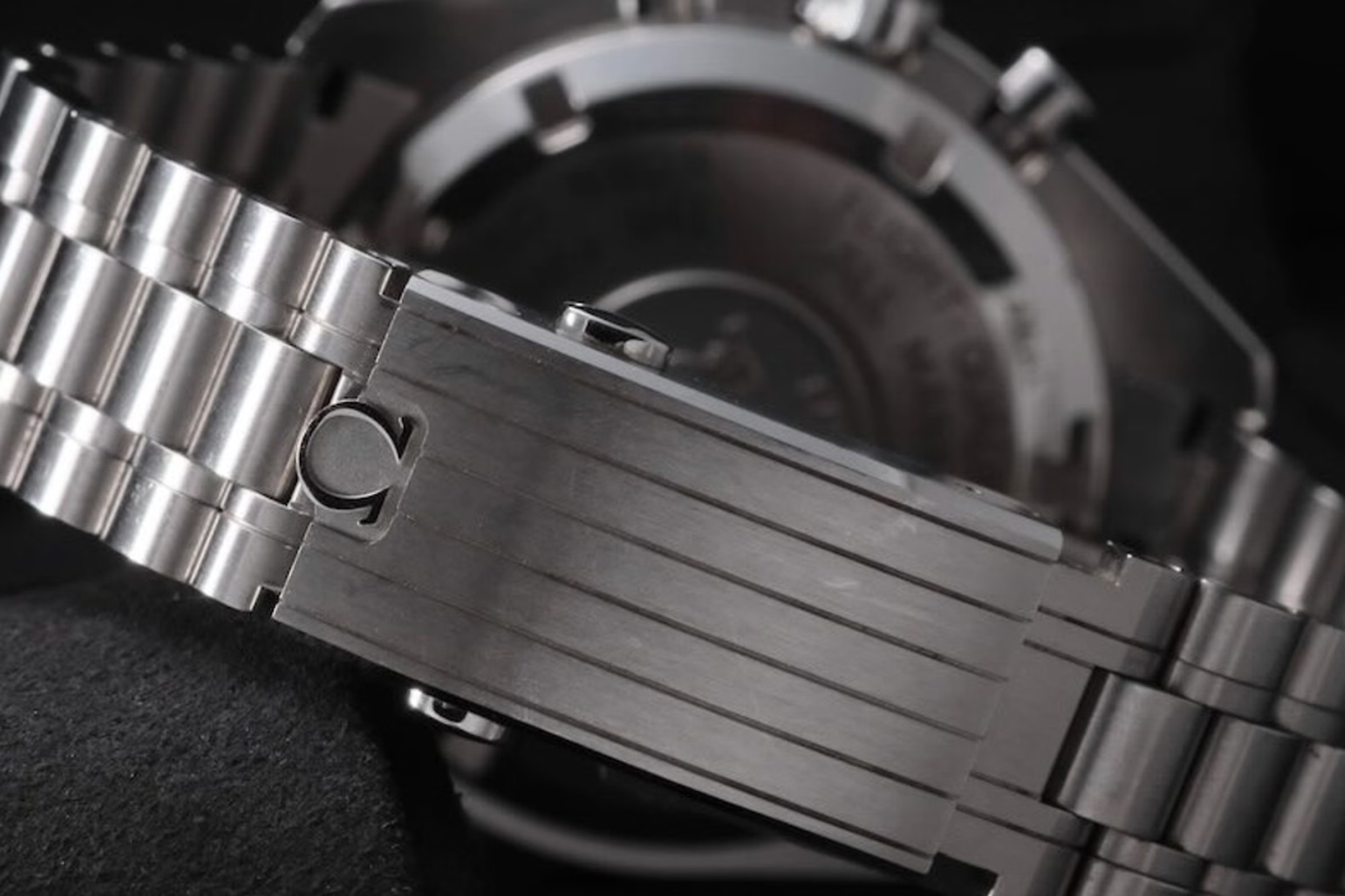
Match the serial to the warranty card and booklet. For how documentation affects both authenticity and resale, see Paper Matching & Provenance. For the reference comparison, see our 3861 vs 1861 guide. Check the chronograph pushers for a crisp engagement, and ensure the dial lume is applied evenly across all markers.
The serial number should be clearly engraved on the underside of the lug and match all provided documentation, and a genuine Speedmaster will always feel substantial on the wrist, reflecting the high standards of Omega quality control.
Verify before you buy
Have a Speedmaster checked via Investigative Sourcing or browse vetted Omega inventory.
Frequently asked
Questions, answered
Is there a logo in the Hesalite crystal?
Yes, genuine Hesalite (acrylic) Moonwatch crystals have a small Omega logo laser-etched in the center.
How do I know which caliber my Speedmaster should have?
Current Moonwatches use the Co-Axial Master Chronometer Cal. 3861; earlier ones use the hand-wound Cal. 1861. The caliber should match the reference and caseback type.
Does a solid caseback mean it's fake?
No, many genuine Moonwatches (especially Hesalite models) have a solid caseback with the hippocampus medallion.